

£37.95
This quartet was written in 1954 when the composer, Carlo Martelli, was a 19 year old student at the Royal College of Music. This publication is of a recent revision of the work. There are three distinct sets of ideas in the first movement which are freely developed, although vestiges of sonata form can be discerned. The second movement is a scherzo and trio, which is joined without a break to the slow third movement – an interesting feature of this conjunction, is that at the close of the slow movement ideas from the trio and then the scherzo return to round things off. The last movement is a succession of free variations on a theme in which the interval of a fourth predominates. For conservatories and professionals.
The Pavão Quartet recorded this work in August 2012 on the CD Carlo Martelli, released in October 2013 by Discadia Records, DISCA 002. Included on the same CD, and also published by Broadbent & Dunn, are Martelli’s String Quartet No. 1, Prelude and Fugue for String Sextet Terzetto for Two Violins and Viola.
Piece Description
This quartet was written in 1954 when the composer, Carlo Martelli, was a 19 year old student at the Royal College of Music. This publication is of a recent revision of the work. There are three distinct sets of ideas in the first movement which are freely developed, although vestiges of sonata form can be discerned. The second movement is a scherzo and trio, which is joined without a break to the slow third movement – an interesting feature of this conjunction, is that at the close of the slow movement ideas from the trio and then the scherzo return to round things off. The last movement is a succession of free variations on a theme in which the interval of a fourth predominates. For conservatories and professionals.
The Pavão Quartet recorded this work in August 2012 on the CD Carlo Martelli, released in October 2013 by Discadia Records, DISCA 002. Included on the same CD, and also published by Broadbent & Dunn, are Martelli’s String Quartet No. 1, Prelude and Fugue for String Sextet Terzetto for Two Violins and Viola.
Review: “The 2nd String Quartet composed by Carlo Martelli is one of the finest works of recent times. Carlo Martelli has explored all the rhythmic and melodic possibilities, creating an outstanding addition to the modern string quartet repertoire.” – Pat Halling, leader of Quartet Pro Musica and Leader/Director of the Virtuoso Ensemble of London, January 2014
Review: “String Quartet No. 2, Opus 2 (1954) is markedly tauter in construction than its predecessor. The opening Allegro non troppo begins in a hesitant, disjointed manner, using a grittier and more dissonant language than the composer’s customary – essentially diatonic – mode of expression: this was a deliberate attempt by Martelli to comment on the kind of ‘progressive’ music he felt composers were expected to produce at that time. However, as the movement steadily gathers momentum, unfolding via his customary process of continuous development, it assumes a more lyrical aspect, nowhere more so than in the strikingly beautiful dolce theme introduced by the viola. The outlines of traditional sonata form may be discerned in this Allegro which is expansive enough to accommodate no fewer than three main ideas, all of which are ultimately brought together in a contrapuntal sleight of hand.
A lively, driving scherzo, whose Italianate second theme is punctuated by repeated chords in the style of guitar strumming, contains a ‘trio’ section in the literal sense that it engages no more than three instruments at any one time.
At the end of the scherzo’s repeat, a profoundly introspective slow movement entitled ‘Lament’ steals in, which gives free rein to the composer’s naturally melodic gifts and constitutes the emotional heart of the work. In an unexpected touch, as this intense and questing lento reaches its conclusion, the Trio is reintroduced, combining a pair of ideas not previously heard together and followed by a truncated reiteration of the Scherzo. Intricately linked, these two inner movements create an impressively variegated single entity. After this structural innovation, the finale is cast in the more traditional form of a set of variations on a theme in which the interval of a perfect fourth predominates. The melody is presented at the outset, unvarnished and vibrato-less and at a moderate pace. After a restatement of the theme at a faster tempo, the sequence of variations, which includes a recurring dancing, triplet-inflected idea as well as a pizzicato only passage, accumulates considerable momentum and intricacy as it proceeds, pressing on inexorably to an extended coda-like variation, marked Presto possibile; this introduces an entirely fresh idea to round the quartet off in a display of fiercely insistent but tightly controlled bravura. It might be argued that all Martelli’s music develops through a process of variation and this movement provides a formal example of his natural aptitude for the technique. Martelli’s String Quartet No. 2 has been widely played and critically acclaimed. After a Wigmore Hall concert organized by the Society for the Promotion of New Music, Arthur Jacobs described it as ‘brimming over with ideas’, with ‘a keen grasp of structure’ and ‘excellently written for strings’. (Musical Times, Vol. 98, No. 1370 (April 1957), p.212). It is mystifying that such an idiomatically scored, boldly structured and directly communicative piece should have taken over five decades to appear on disc, but its recorded debut presented here is particularly welcome and should serve to win the work many new admirers.” – Paul Conway for Discadia Records, 2013
Additional information
| Media | |
|---|---|
| Composer | |
| Instrumentation | |
| Difficulty | |
| Series |
Biography
Biography
Martelli, Carlo
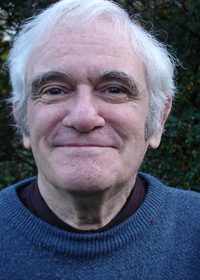
Carlo Martelli was born on the 12th December 1935 in London to an Italian father and an English mother. By the age of eleven Carlo had developed a passion for the symphony orchestra. Just before his twelfth birthday he started taking regular violin lessons and very soon began writing elaborate orchestral scores achieving a mastery in this field by the age of sixteen, by which time he had obtained a County Scholarship to attend the Royal College of Music in London, studying composition and viola. By the time he was 21 he had written a string quartet and had already had a great deal of success with several large scale serious symphonic compositions, notably his Second Symphony, which had many performances and broadcasts by several major orchestras in the few years after its completion. In the 1960's he turned to film music to make a living, and also worked steadily as a freelance viola player. His arrangements for string quartet, trio and other combinations number well over 250 and are played by hundreds of groups all over the world.
Related products
String Quartet
A solid, serious work for aspiring string quartets or established groups, this piece was the subject of a master class from the Wihan Quartet from the Czech Republic. The quartet, inspired by Janáček's Intimate Letters quartet, was similarly inspired by letters from a woman to her lover. It is scored in three contrasting movements consisting of a gestural first movement, a slow arch form second movement and a fiery syncopated 5/4 finale.
String Quartet
Tonal, well crafted and lasting the test of time, this second string quartet was written in New York. The work received its first broadcast by the David Martin String Quartet on BBC Radio 3 in September 1947, and received its first performance in July 1952 at the Cheltenham Festival with the New London String Quartet. For professionals and advanced students.
String Quartet
Written in New York in 1945 and premiered by the Blech String Quartet on the 30th June 1945 at the Cheltenham Festival, the heart of this quartet is its beautifully integrated slow movement. For professionals and advanced students.

This quartet evokes the sounds and attitudes of The Big Apple
String Quartet
Most string quartets are long, but this short little piece in one movement was intended as an encore item, but could also fit comfortably into any portfolio for weddings or other functions. For schools, colleges, conservatories and professionals.

'Frisco by those in the know is a jewel of a city. The titles of the four movements tell it all - Keeping Ahead of yourself is what you have to do in a city with a glorious past but an uncertain and uneasy present. Light Reflecting from the Bridge seems to warm the whole city, bathing it in a gently reddish hue. Alongside the pathway in one of the city parks is a sand track for horses, and every now and then you see Footprints in the Sand, some are in couples, others alone. The thoughts of those people who are alone touches you, but it is the Time to Be Certain and you regain your beliefs and confidence.