

£26.95
Written in New York in 1945 and premiered by the Blech String Quartet on the 30th June 1945 at the Cheltenham Festival, the heart of this quartet is its beautifully integrated slow movement. For professionals and advanced students.
Piece Description
Written in New York in 1945 and premiered by the Blech String Quartet on the 30th June 1945 at the Cheltenham Festival, the heart of this quartet is its beautifully integrated slow movement. For professionals and advanced students.
Additional information
| Media | |
|---|---|
| Composer | |
| Instrumentation | |
| Difficulty | |
| Series |
Biography
Biography
Arnell, Richard
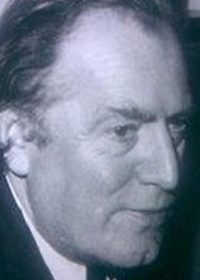
Richard Arnell was born in London in 1917 and educated at the Hall School, Hampstead and University College School before entering the Royal College of Music where he studied composition with John Ireland and Piano with Sir John Dykes. It was here that he began his first string quartet which was first performed by the Galimer Quartet at the 52nd Street New York Public Library in 1940. In 1938 he was awarded the Farrar Prize for composition. Between 1939 and 1947 he wrote his first important compositions, including his first three symphonies, concertos for violin and for piano and three string quartets. He was taken up by eminent conductors, among them Leopold Stokowski and Sir Thomas Beecham. From 1943 to 1946 he was music consultant to the BBC's North American Service. In 1947 he returned to England and became a composition teacher at Trinity College of Music, remaining on the staff until his retirement in 1987. He became an Honorary Fellow of the College in 1950 and a Principal Lecturer in 1981. He was appointed as music director and board member of the London International Film School from 1975 to 1988 when he retired. Arnell died in 2009.
Related products

A contemporary work in one movement that was begun in 1939 when the composer was in his fourth and last year at the Royal College of Music. It was completed in New York, receiving its first performance on the 21st April 1940 by the Galimir Quartet in a series of concerts promoted by the New York Public Library.
Written in New York in 1945 and premiered by the Blech String Quartet on the 30th June 1945 at the Cheltenham Festival, the heart of this quartet is its beautifully integrated slow movement. For professionals and advanced students.
String Quartet
A solid, serious work for aspiring string quartets or established groups, this piece was the subject of a master class from the Wihan Quartet from the Czech Republic. The quartet, inspired by Janáček's Intimate Letters quartet, was similarly inspired by letters from a woman to her lover. It is scored in three contrasting movements consisting of a gestural first movement, a slow arch form second movement and a fiery syncopated 5/4 finale.
String Quartet
Written above all to be enjoyed by the players, audiences have shown that they too share that same delight. Both of Mason's string quartets are in four movements which exploit the instruments on equal terms, and both are in a musical language that enables the strings to sing as they should. These two quartets will happily share any programme with music from Haydn to Debussy and beyond.
String Quartet
This quartet evokes the sounds and attitudes of The Big Apple

A musical representation of the city or area of the titles as experienced by the composer. The music is drawn from pop, rock, jazz and jazz funk.