


£10.95
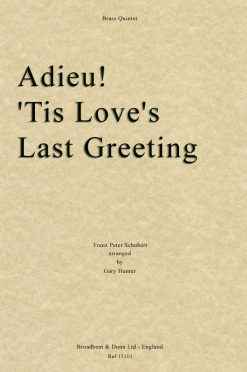
This arrangement by Gary Hunter of Schubert’s Adieu portrays the song in a different colour. Written for brass quintet, the song remains lyrical and easy on the ear, and is ideal for church settings and general concert performances.
Piece Description
This arrangement by Gary Hunter of Schubert’s Adieu portrays the song in a different colour. Written for brass quintet, the song remains lyrical and easy on the ear, and is ideal for church settings and general concert performances.
Additional information
| Media | |
|---|---|
| Composer | |
| Arranger | |
| Instrumentation | |
| Difficulty | |
| Series |
Biography
Biography
Hunter, Gary
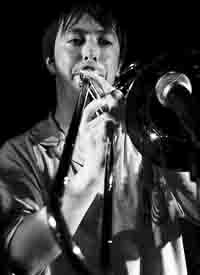
Gary Hunter was born in Whitehaven, Cumbria in 1990. He took a huge interest in music at an early age and began his education as a pianist. In his teens he decided to take up the trombone, studying under brass band renowned Gordon Evans MBE. In 2008 Gary attended The University of Hertfordshire where he attained a second class honours degree in Music Composition and Technology. He stayed at the University for a final year where he then attained a masters degree in Music Composition for Film and Media.
Related products
This orchestral score has been excellently transcribed by Ian Lawrence into a complex and entertaining brass quintet arrangement that is suitable for both students and professional players.
Brass Quintet
Two Bach fugues arranged effectively for brass quintet by Ian Lawrence. For schools, studios and professionals.
The Planets Suite in Miniature is an attempt to take the listener through Gustav Holst's orchestral masterpiece in less than ten minutes using only five brass instruments. Only five of the seven most famous and recognisable melodies from the original are used, beginning, like the prototype, with Mars. The different movements appear in the same order as Holst wrote, although the rhythmic pattern of Mars reappears on occasion. The piece ends with a clash of interest as the two most well known movements, Mars and Jupiter, compete for the right to finish. The harsh sounds of Mars are heard first before the hymnal Jupiter theme is heard over the driving rhythm of Mars. Jupiter finally triumphs with the piece ending with one final verse of the tune used for the hymn I Vow To Thee My Country. This instantly recognisable arrangement by Thomas Chinery is both challenging and playable, and of a length that will not tire the players too much while at the same time maintaining the essence and power of the original music to ensure interest for both audience and players alike. A recording by the Argento Brass Quintet can be heard on http://www.youtube.com/watch?v=hGg1-pcHzrs
This arrangement by Robin Benton uses just two of the numerous themes from Richard Wagner's overture to his 1868 opera The Mastersingers of Nuremberg. The opening theme represents the Mastersingers themselves. This dignified melody is stated and then developed contrapuntally, leading to the second theme - this theme is used in the opera for the entry of the Mastersingers. The music builds to a climax that introduces a short reprise of the majestic Mastersingers theme, and triumphant fanfares bring the piece to a rousing finish.
Brass Quintet
Written for players at the Centre for Young Musicians in London where the composer Gordon Carr taught for thirty years.
Brass Quintet
This is a charming collection of madrigals arranged effectively for brass quintet by Ian Lawrence.