

£8.95
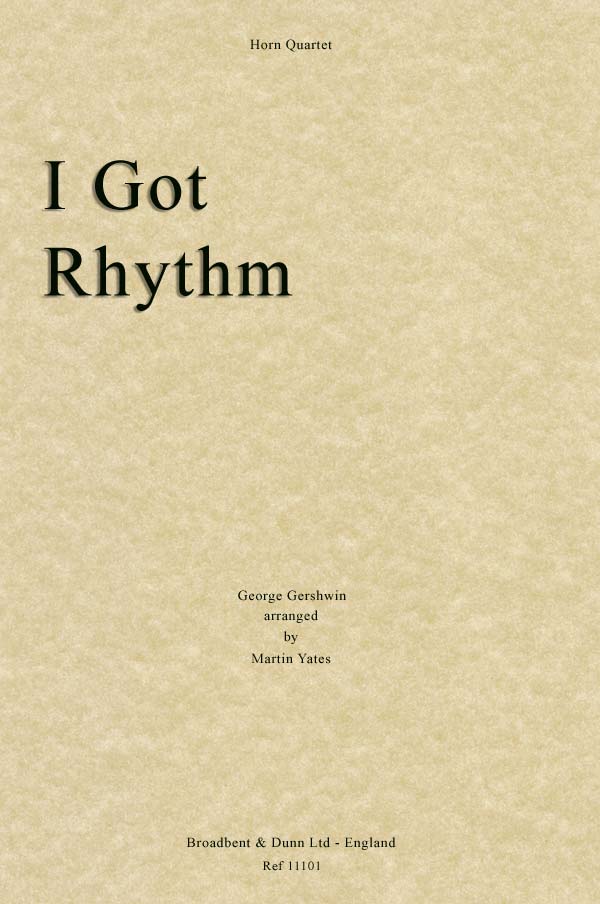
An arrangement by Martin Yates for horn quartet of this popular song.
Piece Description
An arrangement by Martin Yates for horn quartet of this popular song.
Additional information
| Media | |
|---|---|
| Composer | |
| Arranger | |
| Instrumentation | |
| Difficulty | |
| Series |
Biography
Biography
Yates, Martin
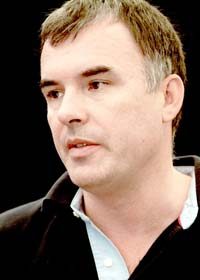
Described by the London Times as "one of the most exciting and versatile British conductors of his generation”, Martin Yates made his conducting debut with Bizet’s 'Carmen' at the Israel National Opera aged 24 and has since had a busy career that has included conducting many of Europe’s major symphony orchestras and at many important opera houses including the Royal Philharmonic Orchestra, Royal Scottish National Orchestra, London Symphony Orchestra, Philharmonia, BBC Concert Orchestra, Royal Stockholm Philharmonic, Royal Flanders Philharmonic, Gothenberg Symphony Orchestra and Opera, Royal Opera House in Convent Garden, Royal Swedish Opera House and the Rome Opera. He has appeared with such leading performers as Montserrat Caballe, Bryn Terfel, Barbara Hendricks, Angela Gheorghiu, Roberto Alagna and Yo-Yo Ma and has conducted the Nobel Peace Prize Concert in Oslo three times. Intending from the outset to pursue a career as a composer, Martin studied with Richard Arnell and Sir John Taverner and has written four string quartets 'LA Beach Music', 'New York Night Music', 'Frisco Bay Music' and 'Nashville, Tennesse'. The ever-popular 'Café Music', a 'Harpsichord Sonatina', 'Divertimento' for oboe, bassoon and double bass and a considerable amount of music involving the flute, most of which was written for the British flautist Anna Noakes. These works include the Sonata 'Fire Island', 'Sonatina 1 and 2', 'Sonata for Flute and Harp' and 'Concerto for Flute, Harp and Strings'. The Guardian described Martin Yates as a composer of confident and engaging music that has a style and colour that is both immediately appealing and rewarding to listen to. Martin has also written several scores for theatre productions including the plays 'Jane Eyre', 'The Woman in White' and 'Dear Octopus', three musicals 'Wuthering Heights', 'The Soap Opera' and 'Nothing Doing Tonight' and later works include 'Brass Quintet' and 'The Promise' for Flute Ensemble. Players as diverse as flautist Anna Noakes, harpist Gillian Tingay, pianist Kathron Sturrock, flautist Emily Beynon, double bass payer Duncan McTeer, soprano Jean Glennon and conductor Kent Nagano have played his music. His very popular arrangements of the two Gershwin classics 'S Wonderful' and 'I Got Rhythm' for horn quartet are played all over the world.
Related products

Horn Quartet with Double Bass or Tuba
Written for the Royal Philharmonic Orchestra's horn section to play at Glyndebourne parties in the early 1960's. In the early 1960's almost all English hornists played on Alexander horns, hence the title. It was composed when Beethoven's Fidelio was being performed at Glyndebourne. One famous aria in this opera features the horns, and near the end they play individual scale run ups in canon, and so for fun the composer has incorporated this in the piece.
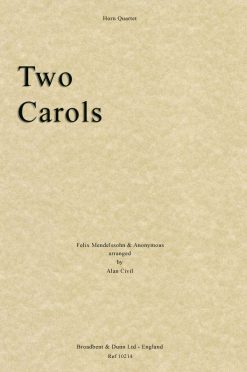
Popular Christmas arrangements by Alan Civil of Hark, The Herald Angels Sing and Coventry Carol.

Good music for beginners, these six miniatures, entitled Horns on Parade, Promenade, The Sunday Walk, Tick-Tock March, Pastorale, Song and The Wild Goose Chase, provide the student with plenty of dynamics and a playing range from G below middle C to D, the ninth above middle C. There is a good variety of meters, tempos, rhythmic and melodic content. Students are introduced to note values and their importance in the first movement, while the fourth movement gives the opportunity for the student to experience the classical/natural horn part. Finishing with a wild goose chase in 6/8 time, the beginner also encounters a 'D.S. al Coda' - a good example of musical geography.
Horn Quartet
Good music for beginners, these six miniatures, entitled Horns on Parade, Promenade, The Sunday Walk, Tick-Tock March, Pastorale, Song and The Wild Goose Chase, provide the student with plenty of dynamics and a playing range from G below middle C to D, the ninth above middle C. There is a good variety of meters, tempos, rhythmic and melodic content. Students are introduced to note values and their importance in the first movement, while the fourth movement gives the opportunity for the student to experience the classical/natural horn part. Finishing with a wild goose chase in 6/8 time, the beginner also encounters a 'D.S. al Coda' - a good example of musical geography.

A Christmas favourite from the pen of the late and celebrated hornist Alan Civil.
A fun arrangement by Alan Civil of the overture of this ever popular opera.