

£9.95
This woodwind trio by Dick Blackford was written originally for music students but should appeal to players of all ages. It evokes the spirit of Springtime with its cheerful energy, but a plaintive middle section reminds us that spring must end!
Piece Description
This woodwind trio by Dick Blackford was written originally for music students but should appeal to players of all ages. It evokes the spirit of Springtime with its cheerful energy, but a plaintive middle section reminds us that spring must end!
Additional information
| Media | |
|---|---|
| Composer | |
| Instrumentation | |
| Difficulty | |
| Series |
Biography
Biography
Blackford, Dick
Dick Blackford studied composition at Manchester University during the late 1950s. He was Head of Music at Nunthorpe Grammar School in York for over 15 years and then at York Sixth Form College for 10 years, before taking early retirement in 1995. This early retirement was prompted by a desire to spend more time on composition. His works include pieces for brass and woodwind.

Related products
Brass Sextet
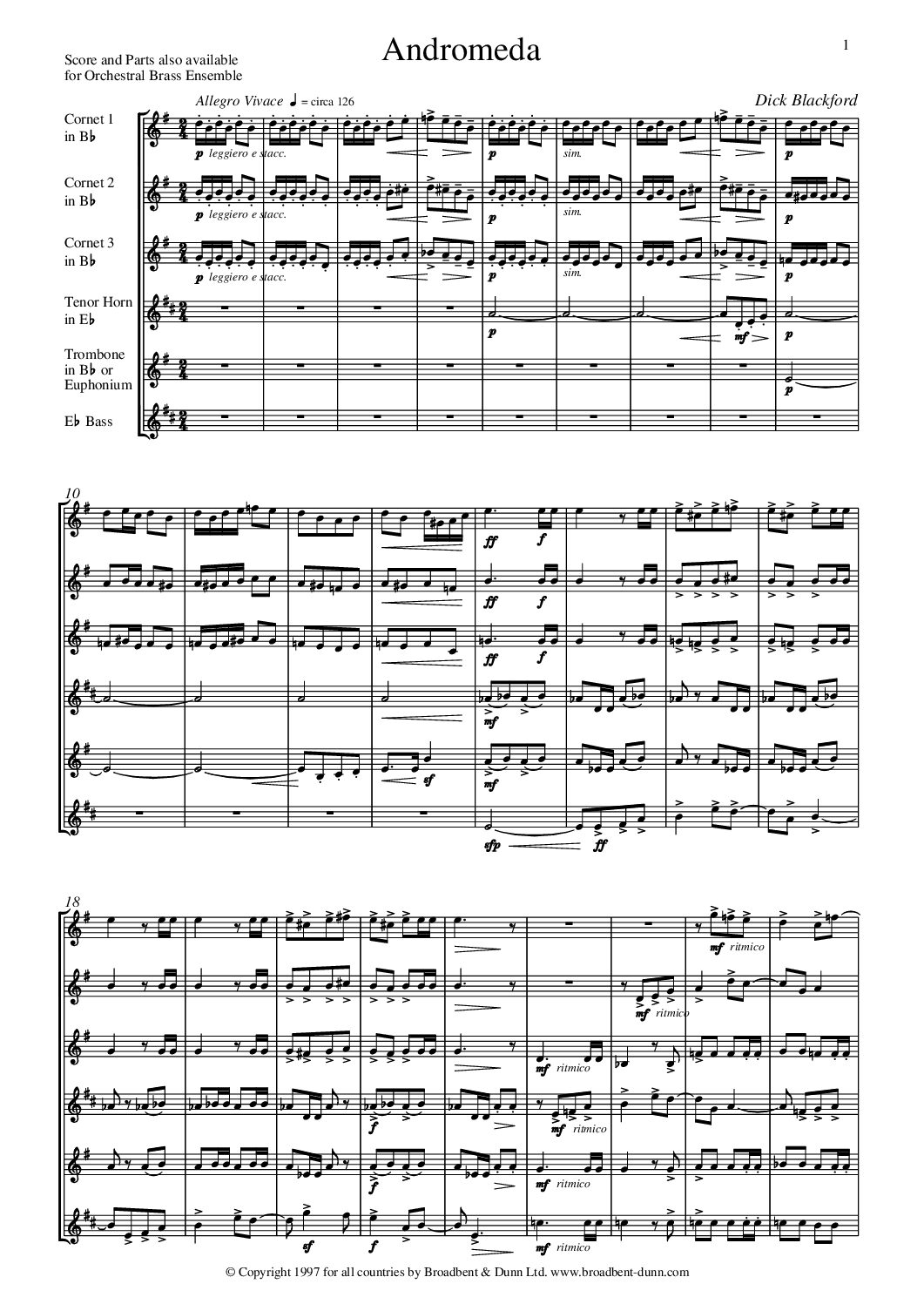
Dick Blackford – Andromeda (Brass Sextet for Brass Band Instruments) – Digital Download
A brass sextet originally written for an ensemble of music students aged 16 to 18, but that is suitable for competent musicians of any age. The piece is attractive and accessible to any audience and is full of rich, exciting brass sounds with a tender middle section for solo horn. It provides an opportunity for the unusual grouping of sextet rather than the traditional brass quintet. The piece is also available in a version for orchestral instruments, which allows flexibility of instrumentation and of clefs.

Another original work by by the late and celebrated hornist Alan Civil.
Brass Sextet
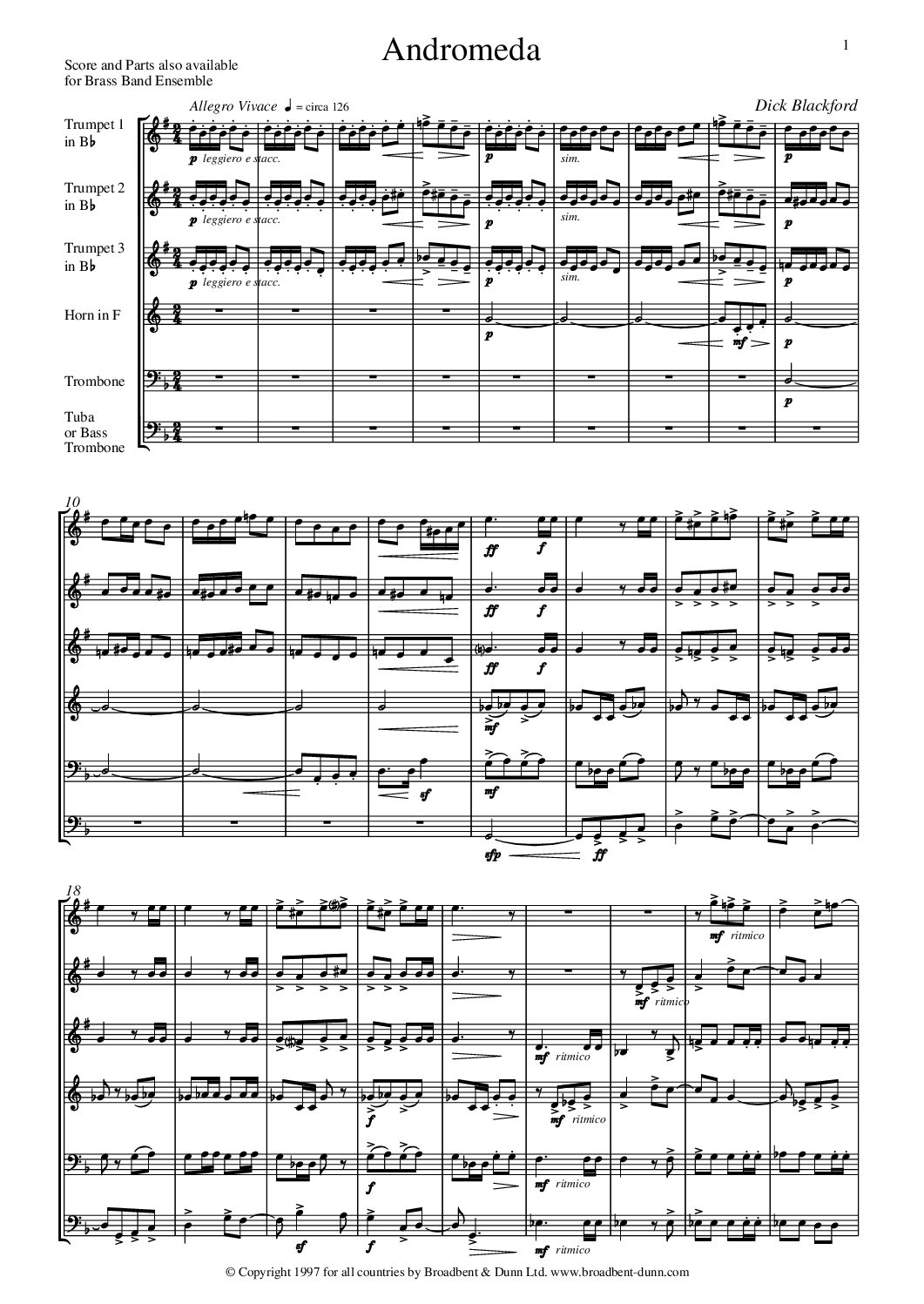
Dick Blackford – Andromeda (Brass Sextet for Orchestral Brass Instruments) – Digital Download
A brass sextet originally written for an ensemble of music students aged 16 to 18, but that is suitable for competent musicians of any age. The piece is attractive and accessible to any audience and is full of rich, exciting brass sounds with a tender middle section for solo horn. It provides an opportunity for the unusual grouping of sextet rather than the traditional brass quintet. The piece is also available in a version for brass band instruments, which allows flexibility of instrumentation and of clefs.
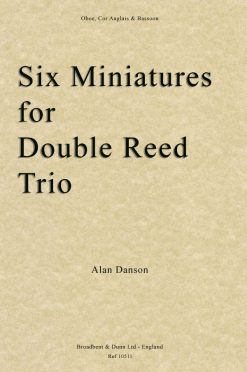
Composed for the Peartree Trio of Peoria in the U.S.A., each miniature is a musical character in terms of styles, settings and trends of yesteryear and today. The Knot Garden evokes the ornate design of gardens of the Elizabethan age and contains many turns and ornaments, providing a good platform to demonstrate the unique blend of double reed players. At the other extreme Double Reed Workout in 7/8 time gives trio members a consistent work out of parts and a modern feel to this historical combination of instruments. The Old Eccentric with ungainly intervals, melodic lines and little turns of phrase represents an old world of mustaches, monocles and old Bentleys. The closing movement Concert Champetre is a playful Gigue in the mood of Champetre times of the past.

The first in a series of three, each movement of these arrangements by Alan Danson presents a 'quasi cameo' of the character of its American origins. Ragtime Cakewalk suggests the essence and style of this type of dance through the chuckling cor anglais, solid bassoon accompaniment and counter line on the clarinet. In Cowboy's Toon the bassoon provides a laid back foundation, whilst the clarinet and oboe duet side by side with a line incorporating some of the bending tones one might expect to hear from the cowboy's drawl. In Barn Dance a sense of team enjoyment is portrayed, with the clarinet line accompanied by high jinks, vocal calls and clapping from the Cor Anglais and Bassoon.

Wind Trio
Alan Danson – Six Miniatures for Double Reed Trio (Oboe, Cor Anglais & Bassoon) – Digital Download
Composed for the Peartree Trio of Peoria in the U.S.A., each miniature is a musical character in terms of styles, settings and trends of yesteryear and today. The Knot Garden evokes the ornate design of gardens of the Elizabethan age and contains many turns and ornaments, providing a good platform to demonstrate the unique blend of double reed players. At the other extreme Double Reed Workout in 7/8 time gives trio members a consistent work out of parts and a modern feel to this historical combination of instruments. The Old Eccentric with ungainly intervals, melodic lines and little turns of phrase represents an old world of mustaches, monocles and old Bentleys. The closing movement Concert Champetre is a playful Gigue in the mood of Champetre times of the past.