

£9.95
This is an arrangement for wind quintet of a late piano work by Brahms. There is not enough music, that communicates the deepest of human emotions, available for wind quintet at present, either as original compositions or in arrangements. By making this arrangement David has contributed to remedying this shortage, as well as bringing a powerful piece to the attention of musicians and audiences who might not otherwise come across it. The arrangement seeks to preserve the textural clarity and sensuous melodic lines of the original. Much of the richness and late romantic warmth of the arrangement comes from Brahms’ flexibility of rhythm and tonality. This piece can be played by an ensemble where nobody is beyond the standard of Grade 8 Associated Board, which would include most adult amateur wind quintets. For secondary schools, community performing groups, teaching studios, colleges, conservatories, amateurs, libraries and professionals.
Piece Description
This is an arrangement for wind quintet of a late piano work by Brahms. There is not enough music, that communicates the deepest of human emotions, available for wind quintet at present, either as original compositions or in arrangements. By making this arrangement David has contributed to remedying this shortage, as well as bringing a powerful piece to the attention of musicians and audiences who might not otherwise come across it. The arrangement seeks to preserve the textural clarity and sensuous melodic lines of the original. Much of the richness and late romantic warmth of the arrangement comes from Brahms’ flexibility of rhythm and tonality. This piece can be played by an ensemble where nobody is beyond the standard of Grade 8 Associated Board, which would include most adult amateur wind quintets. For secondary schools, community performing groups, teaching studios, colleges, conservatories, amateurs, libraries and professionals.
Review: “The Romance is 57 bars in length: short but perfectly formed would be a good description of the original, composed in 1892, and Adkins’s adaptation for wind quintet is well crafted and eminently playable by a competent group. The horn states the Andante main theme in 6/4, with a sotto voce accompaniment from flute, clarinet (starting on a top E Flat) and bassoon, which maintains a supporting role throughout. Oboe and flute then take up the melody and this leads into the middle section Allegretto Grazioso, again featuring mainly the oboe and flute. The clarinet has some tricky interjections in bar 29, being required to play delicately up to top G. The horn gets the opportunity to shine later on, starting the sequence at bar 40 with a trill followed by semiquavers, continued by the clarinet, oboe and flute. The opening theme returns on the horn, and the music concludes gently with a dynamic of ppp. String quartets have established themselves as first choice for the happy couple wanting ensemble music at their wedding, but with more music like this Romance to play the wind quintet may have its attractions. The hard part is changing the musical perceptions and prejudices of the general public and encouraging them to appreciate wind music, but readers of Winds already know all about that.” – Robert Parker in Winds Summer 2008
Additional information
| Media | |
|---|---|
| Composer | |
| Arranger | |
| Instrumentation | |
| Difficulty | |
| Series |
Biography
Biography
Adkins, David
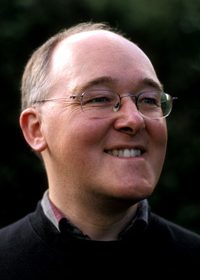
David Adkins was born in Edgbaston, in the English Midlands in 1958. He began his musical education as a chorister. He plays the organ and the trombone and also sings. He was Sir William Paddy Organ Scholar of St. John's College, University of Oxford from 1977 until 1980, where he obtained an Honours Degree in Music. He went on to obtain a Postgraduate Certificate in Education and a Master of Music degree in Composition at the University of London. His subsequent career has combined teaching, choir training, composition and organ playing. In 1995, the percussion section of the National Youth Orchestra of Great Britain recorded his Changes for ten percussion players. Parts of his All Saints' Day Music (published by Fagus) and Book of Apostles were played at the Annual Festival of New Organ Music in London in the autumn of 2007. Other compositions include songs, a Prelude and Fugue for brass trio, a trio for oboe, clarinet and French horn, and Steel, a twelve-minute work for violin, 'cello, flute, clarinet and piano. He has been in charge of the music of several London churches and was, for eight years, Director of Music to the Society of Our Lady of Pewe in Westminster Abbey. He has given organ recitals in England, France, Germany and the United States and has made several CD recordings.
Related products

A arrangement by Alan Civil for wind quintet of four of the movements from Mussorgsky's most famous piano composition.
This is an arrangement for wind quintet of a late piano work by Brahms. There is not enough music, that communicates the deepest of human emotions, available for wind quintet at present, either as original compositions or in arrangements. By making this arrangement David has contributed to remedying this shortage, as well as bringing a powerful piece to the attention of musicians and audiences who might not otherwise come across it. The arrangement seeks to preserve the textural clarity and sensuous melodic lines of the original. Much of the richness and late romantic warmth of the arrangement comes from Brahms' flexibility of rhythm and tonality. This piece can be played by an ensemble where nobody is beyond the standard of Grade 8 Associated Board, which would include most adult amateur wind quintets. For secondary schools, community performing groups, teaching studios, colleges, conservatories, amateurs, libraries and professionals.

Each instrument has a turn with the tune, so this arrangement by Roy Thackray is helpful in learning to recognise the sound of the instruments, both together and separately.
An arrangement for wind quintet by Alan Civil of this excellently crafted piece of music.
Another clever arrangement from the pen of the late and celebrated hornist Alan Civil.

In this melodic and appealing music the five instruments enjoy opportunities to caress the ears of audiences who may have been fearing heavier and more uncompromising fare.