

£11.95
Another original work by by the late and celebrated hornist Alan Civil.
Piece Description
Another original work by by the late and celebrated hornist Alan Civil.
Review: “Delightful English chamber work. For colleges, conservatories and professionals.” – Special Flute New Issue, July 1997
Additional information
| Media | |
|---|---|
| Composer | |
| Instrumentation | |
| Difficulty | |
| Series | |
| Movement Titles |
Biography
Biography
Civil, Alan
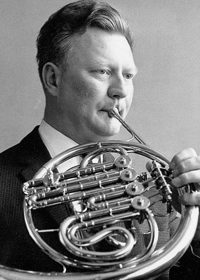
Alan Civil was born in 1929 and died in 1989. Alan started to play the French horn as a young boy, and joined an army band as a teenager. He studied the horn with Aubrey Brain, the father of Dennis Brain, and played second horn to Dennis Brain in the Royal Philharmonic Orchestra, taking over as principal horn when Dennis Brain left. In 1955 Alan joined the Philharmonia as principal horn, and in 1966 he became the principal horn of the BBC Symphony Orchestra, where he remained until he retired in 1988. He also performed as a soloist and recordings include Mozart's 'Four Horn Concertos' and Benjamin Britten's 'Serenade for Tenor, Horn and Strings' with Robert Tear. He was also a member of the Alan Civil Horn Trio, taught at the Royal College of Music and was awarded an OBE in 1985. Alan was also a prolific composer and arranger, writing many pieces for the horn as well as for an array of unusual instrument combinations.
Related products
Horn & Piano
A fine arrangement to add to Alan Civil's music for French Horn. The second movement of this work (Allegro) was an Associated Board of the Royal Schools of Music (ABRSM) Grade 6 Exam Piece between 2013 and 2022.
This woodwind trio by Dick Blackford was written originally for music students but should appeal to players of all ages. It evokes the spirit of Springtime with its cheerful energy, but a plaintive middle section reminds us that spring must end!
Composed for the Peartree Trio of Peoria in the U.S.A., each miniature is a musical character in terms of styles, settings and trends of yesteryear and today. The Knot Garden evokes the ornate design of gardens of the Elizabethan age and contains many turns and ornaments, providing a good platform to demonstrate the unique blend of double reed players. At the other extreme Double Reed Workout in 7/8 time gives trio members a consistent work out of parts and a modern feel to this historical combination of instruments. The Old Eccentric with ungainly intervals, melodic lines and little turns of phrase represents an old world of mustaches, monocles and old Bentleys. The closing movement Concert Champetre is a playful Gigue in the mood of Champetre times of the past.

A fun arrangement by Alan Civil of the overture of this ever popular opera.

A Christmas favourite from the pen of the late and celebrated hornist Alan Civil.
The first in a series of three, each movement of these arrangements by Alan Danson presents a 'quasi cameo' of the character of its American origins. Ragtime Cakewalk suggests the essence and style of this type of dance through the chuckling cor anglais, solid bassoon accompaniment and counter line on the clarinet. In Cowboy's Toon the bassoon provides a laid back foundation, whilst the clarinet and oboe duet side by side with a line incorporating some of the bending tones one might expect to hear from the cowboy's drawl. In Barn Dance a sense of team enjoyment is portrayed, with the clarinet line accompanied by high jinks, vocal calls and clapping from the Cor Anglais and Bassoon.