

£11.95
This arrangement by Gary Hunter of Schubert’s Adieu portrays the song in a different colour. Written for brass quintet, the song remains lyrical and easy on the ear, and is ideal for church settings and general concert performances.
Piece Description
This arrangement by Gary Hunter of Schubert’s Adieu portrays the song in a different colour. Written for brass quintet, the song remains lyrical and easy on the ear, and is ideal for church settings and general concert performances.
Additional information
| Media | |
|---|---|
| Composer | |
| Arranger | |
| Instrumentation | |
| Difficulty | |
| Series |
Biography
Biography
Hunter, Gary
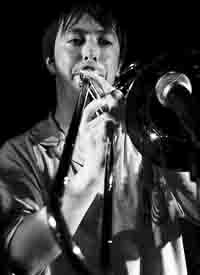
Gary Hunter was born in Whitehaven, Cumbria in 1990. He took a huge interest in music at an early age and began his education as a pianist. In his teens he decided to take up the trombone, studying under brass band renowned Gordon Evans MBE. In 2008 Gary attended The University of Hertfordshire where he attained a second class honours degree in Music Composition and Technology. He stayed at the University for a final year where he then attained a masters degree in Music Composition for Film and Media.
Related products
Brass Quintet
Arranged by Stephen Wick, this is a show piece for two solo piccolo trumpets and is a sumptuous alternative to the Purcell. For advanced students and professionals.
Brass Quintet
Written to be light, bright entertainment this work is an interesting, melodic suite with plenty of rhythmic coloration. The four movements are very varied and include a lyrical and soulful horn solo, unusual in this sort of repertoire. For colleges, conservatoires, professionals.
Brass Quintet
Mozart arr. Wick – The Sleighride from Thirteen German Dances (Brass Quintet with Sleighbells)
At last, a Mozart arrangement that works for brass! A charming ländler but with the colourful addition of a piccolo trumpet that represents the post horn, and a set of tuned sleighbells (that can be replaced by the more commonly found unpitched sleighbells). Great fun for classy Christmas concerts, but needs a piccolo trumpet player capable of holding high notes! Arranged by Stephen Wick.
Two baroque anthems effectively arranged for brass quintet by Ian Lawrence.
Brass Quintet
This is a charming collection of madrigals arranged effectively for brass quintet by Ian Lawrence.
Dowland was the most famous composer of his day - he had an international reputation and was famous for the beauty of his songs. The dance numbers here show a complexity way beyond the normal brass consort music of his time. The gentle Semper Dowland, Semper Dolens is one of the most beautiful pieces of the 16th (or indeed any) Century. Arranged by Stephen Wick and suitable for students and professionals.