


£14.95
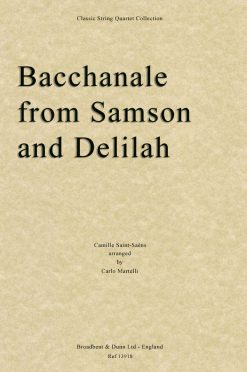
This music in this arrangement by Carlo Martelli accompanies the drunken and riotous revelry of the Philistines celebrating their capture of Samson after his betrayal by Delilah, in Act 3 of Saint-Saëns opera.
Piece Description
This music in this arrangement by Carlo Martelli accompanies the drunken and riotous revelry of the Philistines celebrating their capture of Samson after his betrayal by Delilah, in Act 3 of Saint-Saëns opera.
Additional information
| Media | |
|---|---|
| Composer | |
| Arranger | |
| Instrumentation | |
| Difficulty | |
| Series |
Biography
Biography
Martelli, Carlo
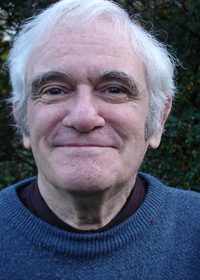
Carlo Martelli was born on the 12th December 1935 in London to an Italian father and an English mother. By the age of eleven Carlo had developed a passion for the symphony orchestra. Just before his twelfth birthday he started taking regular violin lessons and very soon began writing elaborate orchestral scores achieving a mastery in this field by the age of sixteen, by which time he had obtained a County Scholarship to attend the Royal College of Music in London, studying composition and viola. By the time he was 21 he had written a string quartet and had already had a great deal of success with several large scale serious symphonic compositions, notably his Second Symphony, which had many performances and broadcasts by several major orchestras in the few years after its completion. In the 1960's he turned to film music to make a living, and also worked steadily as a freelance viola player. His arrangements for string quartet, trio and other combinations number well over 250 and are played by hundreds of groups all over the world.
Related products
Grieg, Edvard Hagerup
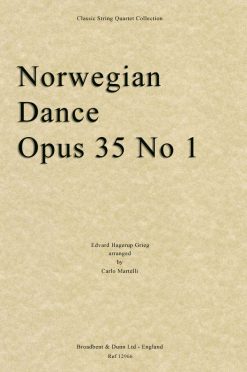
Grieg arr. Martelli – Norwegian Dance Opus 35 No. 1 (String Quartet)
This charming and characteristic dance is one of Grieg's many pieces for piano with a distinct national flavour, here expertly transcribed for string quartet by Carlo Martelli. For conservatories and professionals.
Saint-Saëns, Camille
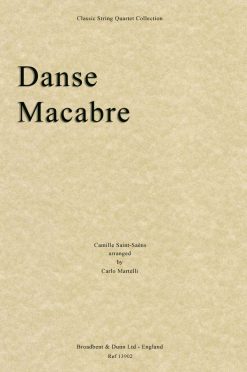
The devil summons the dead from their graves with his fiddle, and skeletons clatter about in waltz rhythm - a scene skilfully evoked by the composer, and here translated to the quartet medium with equal talent by the arranger Carlo Martelli. For colleges, conservatories and professionals.

Bizet, Georges
Bizet arr. Martelli – Intermezzo and Adagietto from L’Arlésienne Suites (String Quartet)
These are two of the eight pieces that comprise the two suites made from the incidental music that Bizet wrote to Daudet's play. Arranged by Carlo Martelli.
Saint-Saëns, Camille
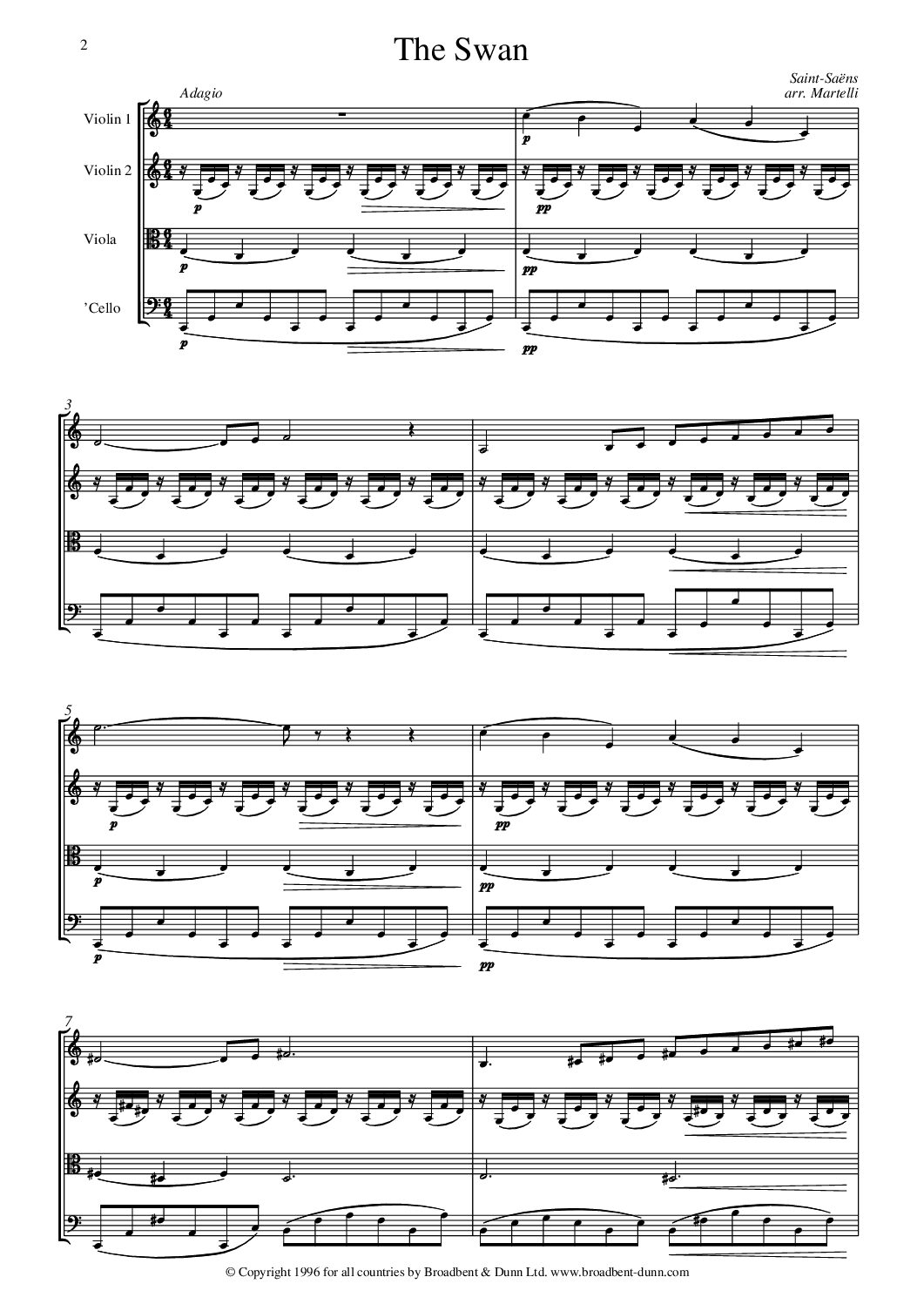
The Carnival of the Animals, the work from which this most perfect and evocative of melodies comes, was strangely not permitted to be published or performed in the composers lifetime. Here arranged for string quartet by Carlo Martelli, Saint-Saëns considered it a mere piece of persiflage and unworthy of him.

Work, Henry Clay
Work arr. Martelli – Marching Through Georgia (String Quartet)
This march, arranged by Carlo Martelli, was composed during the American civil war to celebrate the Yankee invasion of the seceding Southern states.

Debussy, Claude
Debussy arr. Martelli – Golliwog’s Cakewalk from Children’s Corner Piano Suite (String Quartet)
This movement from Debussy's Children's Corner piano suite is one of its composers most popular pieces, here skilfully arranged by Carlo Martelli for string quartet.