

£10.95
The work from which this arrangement for string quartet by Carlo Martelli was taken was originally a suite for piano, written in free imitation of the style of Couperin. It is perhaps best known in the orchestral version made by the composer.
Piece Description
The work from which this arrangement for string quartet by Carlo Martelli was taken was originally a suite for piano, written in free imitation of the style of Couperin. It is perhaps best known in the orchestral version made by the composer.
Additional information
| Media | |
|---|---|
| Composer | |
| Arranger | |
| Instrumentation | |
| Difficulty | |
| Series |
Biography
Biography
Martelli, Carlo
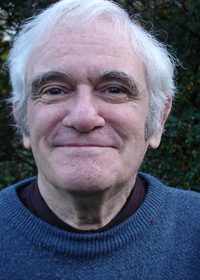
Carlo Martelli was born on the 12th December 1935 in London to an Italian father and an English mother. By the age of eleven Carlo had developed a passion for the symphony orchestra. Just before his twelfth birthday he started taking regular violin lessons and very soon began writing elaborate orchestral scores achieving a mastery in this field by the age of sixteen, by which time he had obtained a County Scholarship to attend the Royal College of Music in London, studying composition and viola. By the time he was 21 he had written a string quartet and had already had a great deal of success with several large scale serious symphonic compositions, notably his Second Symphony, which had many performances and broadcasts by several major orchestras in the few years after its completion. In the 1960's he turned to film music to make a living, and also worked steadily as a freelance viola player. His arrangements for string quartet, trio and other combinations number well over 250 and are played by hundreds of groups all over the world.
Related products
Carlo Martelli has employed great skill in capturing the oriental flavour of the piece (also known as Princess of the Pagodas). Originally for piano duet but better known in its orchestral version.
Bruch, Max Christian Friedrich
Bruch arr. Martelli – Adagio from Violin Concerto in G Minor (String Quartet)
In this arrangement by Carlo Martelli of the beautiful slow movement of Bruch's Violin Concerto the solo part is unchanged and the orchestral part arranged for the other three players.
Chabrier, Emmanuel
Chabrier's short but astonishingly brilliant orchestral works, of which España is one, are among the best light music ever written. This arrangement by Carlo Martelli for string quartet captures perfectly the virtuosic nature of the original score.

Ravel, Maurice
Ravel arr. Martelli – Rigaudon from Le Tombeau de Couperin (String Quartet) – Digital Download
The Rigaudon is a lively jumping quickstep for couples that was fashionable in 18th century France. This arrangement by Carlo Martelli is one of six movements of a suite composed for piano by Ravel in free imitation of the style of Couperin. Ideal for colleges, conservatories and professionals.
The Rigaudon is a lively jumping quickstep for couples that was fashionable in 18th century France. This arrangement by Carlo Martelli is one of six movements of a suite composed for piano by Ravel in free imitation of the style of Couperin. Ideal for colleges, conservatories and professionals.
Ravel, Maurice
Carlo Martelli has skilfully transformed Ravel's original, which he described as orchestration without music, into an effective and exciting exercise in dynamic contrast and colour for the much more restricted medium of the string quartet. Ideal for concerts, weddings and all occasions.