

£10.95
The Pavão Quartet recorded this fine arrangement of the famous slow movement from Dvořák’s final symphony on the CD Dreaming, released in 2008 on Discrete Recordings DISC0801 and re-released in 2010 on Discadia Records DISCA001. Included on the same CD are four more of Carlo Martelli’s Grieg, Elgar, Beethoven and Debussy arrangements also published by Broadbent & Dunn.
Piece Description
The Pavão Quartet recorded this fine arrangement of the famous slow movement from Dvořák’s final symphony on the CD Dreaming, released in 2008 on Discrete Recordings DISC0801 and re-released in 2010 on Discadia Records DISCA001. Included on the same CD are four more of Carlo Martelli’s Grieg, Elgar, Beethoven and Debussy arrangements also published by Broadbent & Dunn.
Review: “Broadbent & Dunn have released a splendid string quartet arrangement of the ‘Largo’ movement from Anton Dvořák’s New World Symphony, written originally for full orchestra. Arranger Carlo Martelli’s musical devices and insights allow the limited instrumentation of a string quartet to appropriately fill out the sonorities and capture the scope of the original composition. The composition’s themes pass through all of the quartet’s instruments, giving each a turn in the spotlight. The inner voices and ‘cello support the first violin, the instrument primarily charged with carrying the theme originally written for oboe. Martelli does an excellent job of choosing the proper instrument, or combination of instruments, to represent each of the themes without losing any of the composition’s depth and texture. Martelli also provides comfortable double-stops within the individual parts. In edition, each individual part fits nicely onto a two-page spread. Cues of what the other instruments play, clear tempo markings, and large measure numbers help players follow their parts in this slow movement. Large notation, dynamic markings that are easy to follow, and courtesy accidentals also make reading this edition a breeze. The systems are well-spaced and the multi-measure rests are conveniently condensed into single blocks. Articulation markings dot the pages and provide helpful indicators for players. Martelli’s fresh arrangement of this well-known piece also provides fabulous bowings that lend themselves easily to the phrasing of the individual themes. Most notable is his handling of the piece’s prominent oboe theme, which in this arrangement is given to the violin. Care is taken to make sure that these bowings facilitate the slow tempo and allow for suitable bow distribution. All things considered, this edition provides a practical, easy to read, and refreshing addition to the quartet repertoire. It should be a success with both players and listeners.” – Graham Pellettieri in Strings 2008
Additional information
| Media | |
|---|---|
| Composer | |
| Arranger | |
| Instrumentation | |
| Difficulty | |
| Series |
Biography
Biography
Martelli, Carlo
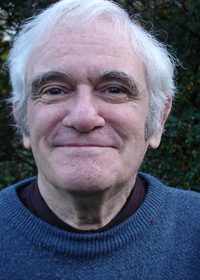
Carlo Martelli was born on the 12th December 1935 in London to an Italian father and an English mother. By the age of eleven Carlo had developed a passion for the symphony orchestra. Just before his twelfth birthday he started taking regular violin lessons and very soon began writing elaborate orchestral scores achieving a mastery in this field by the age of sixteen, by which time he had obtained a County Scholarship to attend the Royal College of Music in London, studying composition and viola. By the time he was 21 he had written a string quartet and had already had a great deal of success with several large scale serious symphonic compositions, notably his Second Symphony, which had many performances and broadcasts by several major orchestras in the few years after its completion. In the 1960's he turned to film music to make a living, and also worked steadily as a freelance viola player. His arrangements for string quartet, trio and other combinations number well over 250 and are played by hundreds of groups all over the world.
Related products
Mendelssohn, Felix & Wagner, Richard
Mendelssohn & Wagner arr. Martelli – Wedding March (String Quartet)
In this arrangement by Carlo Martelli the middle section of Mendelssohn's famous wedding march has been replaced by Wagner's equally famous bridal march from Lohergrin. Two for the price of one, so to speak!
Bizet, Georges
Bizet arr. Martelli – Intermezzo and Adagietto from L’Arlésienne Suites (String Quartet)
These are two of the eight pieces that comprise the two suites made from the incidental music that Bizet wrote to Daudet's play. Arranged by Carlo Martelli.
Perhaps the most well known of Liszt's compositions, the unrivalled virtuosity of the original piano version is expertly conveyed in this arrangement by Carlo Martelli for string quartet.

Dvořák, Antonín
Dvořák arr. Martelli – Slavonic Dance, Opus 46 No. 1 (String Quartet) – Digital Download
This jaunty and melodious piece is the first of sixteen written originally for piano duet but better known in their orchestral version, and now arranged for string quartet by Carlo Martelli.
Beethoven, Ludwig Van
Beethoven arr. Martelli – Moonlight Sonata, Movements 1 and 2 (String Quartet)
The first movement of this sonata is one of Beethoven's most loved pieces, with the nocturnal romantic mood it encapsulates being perfectly captured in this arrangement. The third movement has been published separately. The Pavão Quartet recorded the first movement on the CD Dreaming, released in 2008 on Discrete Recordings DISC0801 and re-released in 2010 on Discadia Records DISCA001. Included on the same CD are four more of Martelli’s Grieg, Elgar, Debussy and Dvořák arrangements also published by Broadbent & Dunn.
This jaunty and melodious piece is the first of sixteen written originally for piano duet but better known in their orchestral version, and now arranged for string quartet by Carlo Martelli.