

£10.95
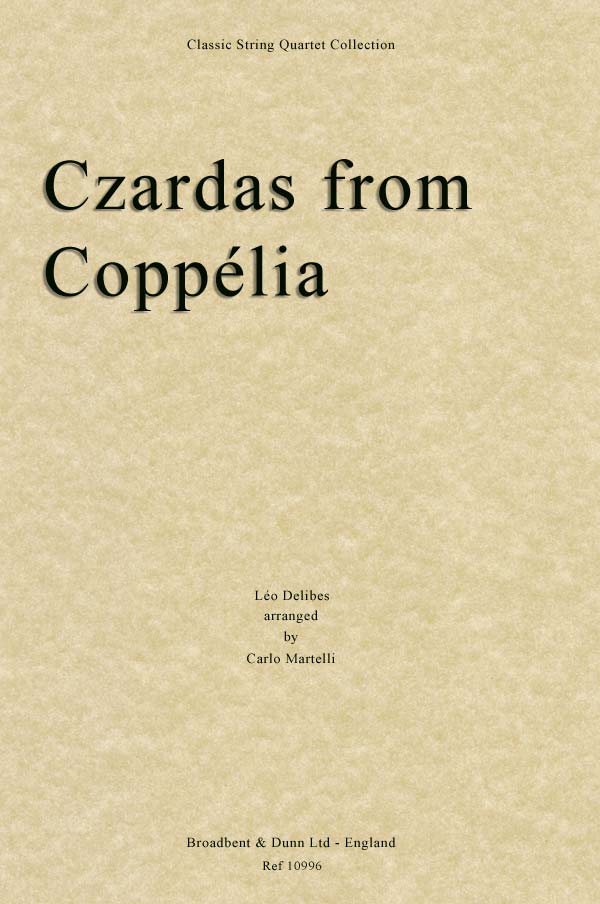
A wild Hungarian dance from one of the most popular ballets in the repertoire, arranged here by Carlo Martelli with great taste and distinction.
Piece Description
A wild Hungarian dance from one of the most popular ballets in the repertoire, arranged here by Carlo Martelli with great taste and distinction.
Additional information
| Media | |
|---|---|
| Composer | |
| Arranger | |
| Instrumentation | |
| Difficulty | |
| Series |
Biography
Biography
Martelli, Carlo
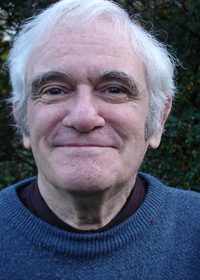
Carlo Martelli was born on the 12th December 1935 in London to an Italian father and an English mother. By the age of eleven Carlo had developed a passion for the symphony orchestra. Just before his twelfth birthday he started taking regular violin lessons and very soon began writing elaborate orchestral scores achieving a mastery in this field by the age of sixteen, by which time he had obtained a County Scholarship to attend the Royal College of Music in London, studying composition and viola. By the time he was 21 he had written a string quartet and had already had a great deal of success with several large scale serious symphonic compositions, notably his Second Symphony, which had many performances and broadcasts by several major orchestras in the few years after its completion. In the 1960's he turned to film music to make a living, and also worked steadily as a freelance viola player. His arrangements for string quartet, trio and other combinations number well over 250 and are played by hundreds of groups all over the world.
Related products
Perhaps the most well known of Liszt's compositions, the unrivalled virtuosity of the original piano version is expertly conveyed in this arrangement by Carlo Martelli for string quartet.
Based on an eclogue by the symbolist poet Mallarmé, this famous piece is a seminal work in the evolution and development of European art music. At first glance it would seem not to lend itself to the quartet medium, but nonetheless Carlo Martelli has succeeded brilliantly in distilling the essence of the composition in all its sensuous beauty and languorousness. For conservatories and professionals.
The central movement Nimrod of Elgar's most popular symphonic orchestral work, has in this arrangement by Carlo Martelli had its original key (E flat) transposed to C for the sake of the greater sonority thus attained.

Debussy, Claude
Debussy arr. Martelli – Golliwog’s Cakewalk from Children’s Corner Piano Suite (String Quartet)
This movement from Debussy's Children's Corner piano suite is one of its composers most popular pieces, here skilfully arranged by Carlo Martelli for string quartet.
Grieg, Edvard Hagerup
Grieg arr. Martelli – Norwegian Dance Opus 35 No. 2 (String Quartet)
Grieg was essentially a miniaturist and therefore he tended to excel at this kind of piece, which evokes with a few characterized turns and intervals a deep love for his homeland. Arranged by Carlo Martelli.

Beethoven, Ludwig Van
Beethoven arr. Martelli – Symphony No. 1 Finale (String Quartet) – Digital Download
This gay and skittish movement from Beethoven's earliest symphony recalls Haydn in the character of its themes and their development. The arranger Carlo Martelli has omitted the opening hesitant violin passage.