


£10.95
This sprightly piece, arranged by Carlo Martelli, is from Chabrier’s Suite Pastorale, originally composed for the pianoforte and later transcribed for orchestra by the composer.
Piece Description
This sprightly piece, arranged by Carlo Martelli, is from Chabrier’s Suite Pastorale, originally composed for the pianoforte and later transcribed for orchestra by the composer.
Additional information
| Media | |
|---|---|
| Composer | |
| Arranger | |
| Instrumentation | |
| Difficulty | |
| Series |
Biography
Biography
Martelli, Carlo
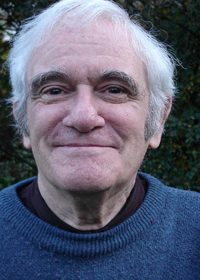
Carlo Martelli was born on the 12th December 1935 in London to an Italian father and an English mother. By the age of eleven Carlo had developed a passion for the symphony orchestra. Just before his twelfth birthday he started taking regular violin lessons and very soon began writing elaborate orchestral scores achieving a mastery in this field by the age of sixteen, by which time he had obtained a County Scholarship to attend the Royal College of Music in London, studying composition and viola. By the time he was 21 he had written a string quartet and had already had a great deal of success with several large scale serious symphonic compositions, notably his Second Symphony, which had many performances and broadcasts by several major orchestras in the few years after its completion. In the 1960's he turned to film music to make a living, and also worked steadily as a freelance viola player. His arrangements for string quartet, trio and other combinations number well over 250 and are played by hundreds of groups all over the world.
Related products
The Passepied is a dance that originated in France and resembles the minuet. This example, arranged by Carlo Martelli from Debussy's Suite Bergamasque, represents a late flowering and highly sophisticated version of the form.
Debussy, Claude
It was in his music for pianoforte that Debussy confided his most personal inspirations. Nonetheless, in the hands of a master like Carlo Martelli they transcribe well to the quartet medium. This tarantella like piece is no exception.
Davies, Henry Walford
This rousing march, arranged by Carlo Martelli, was written by the then 'Master of the King's Music' to celebrate the R.A.F. victory over Hitler's Luftwaffe in September 1940. For secondary schools, colleges, conservatories and professionals.

Chabrier, Emmanuel
Chabrier arr. Martelli – España (String Quartet) – Digital Download
Chabrier's short but astonishingly brilliant orchestral works, of which España is one, are among the best light music ever written. This arrangement by Carlo Martelli for string quartet captures perfectly the virtuosic nature of the original score.
Based on an eclogue by the symbolist poet Mallarmé, this famous piece is a seminal work in the evolution and development of European art music. At first glance it would seem not to lend itself to the quartet medium, but nonetheless Carlo Martelli has succeeded brilliantly in distilling the essence of the composition in all its sensuous beauty and languorousness. For conservatories and professionals.
Beethoven, Ludwig Van
Beethoven arr. Martelli – Moonlight Sonata, Movements 1 and 2 (String Quartet)
The first movement of this sonata is one of Beethoven's most loved pieces, with the nocturnal romantic mood it encapsulates being perfectly captured in this arrangement. The third movement has been published separately. The Pavão Quartet recorded the first movement on the CD Dreaming, released in 2008 on Discrete Recordings DISC0801 and re-released in 2010 on Discadia Records DISCA001. Included on the same CD are four more of Martelli’s Grieg, Elgar, Debussy and Dvořák arrangements also published by Broadbent & Dunn.