
£27.95
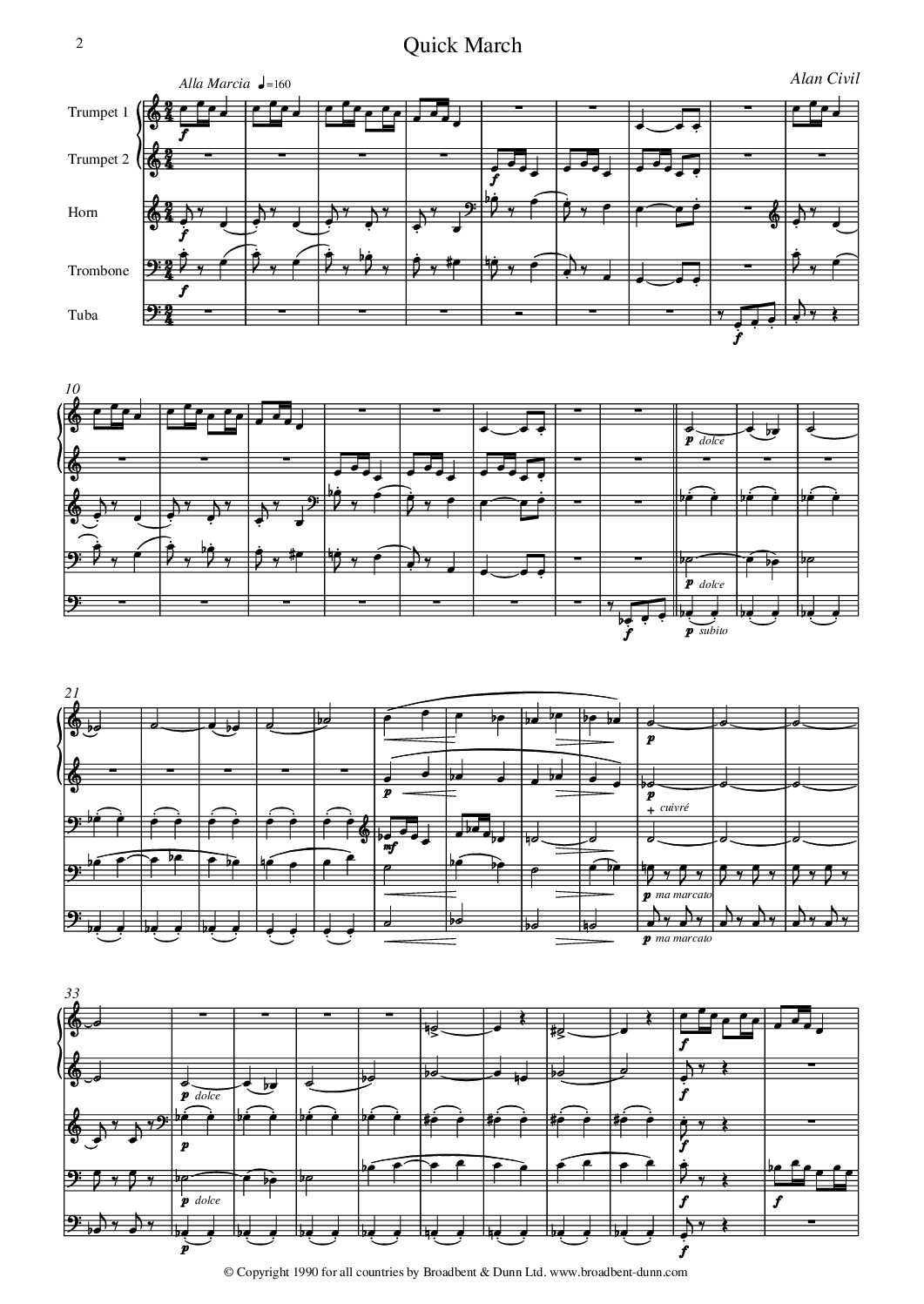
Six movements, starting with Quick March which requires some fast and neat tonguing from all members of the quintet. The Polka which follows is full of colour and requires dexterous trumpet playing. The third movement Blues is a long way from a traditional New Orleans blues – with its melancholy mood and Debussy like harmony it is more like a small impressionist tone poem. Merry Waltz is followed by Preamble, a gentle, atmospheric piece at a leisurely walking tempo. The final movement of this suite Tarandtango (Tarantango) cleverly combines two dances, the energetic tarantella and the elegant tango, resulting in an exciting and virtuoso finale.
Piece Description
Six movements, starting with Quick March which requires some fast and neat tonguing from all members of the quintet. The Polka which follows is full of colour and requires dexterous trumpet playing. The third movement Blues is a long way from a traditional New Orleans blues – with its melancholy mood and Debussy like harmony it is more like a small impressionist tone poem. Merry Waltz is followed by Preamble, a gentle, atmospheric piece at a leisurely walking tempo. The final movement of this suite Tarandtango (Tarantango) cleverly combines two dances, the energetic tarantella and the elegant tango, resulting in an exciting and virtuoso finale.
Review: “This is virtuoso writing and music for virtuoso performers. The first movement, Quick March, will require a good sense of rhythm and strong players especially in the trumpets. It is marked at quarter note equals 160 and contains lots of sixteenth notes, which may call for double tonguing from all players. The style will have to be crisp and light as the mood of the music will be destroyed with heavy playing. Titled Polka, the second movement will again require rehearsal to bring it off. It is in three sections, polka-trio-polka. The tuba part is not extreme in range, but does contain some nice passages. The third movement is called Blues, and while not extremely taxing, all instruments play from first measure to last. The composer writes that this movement may be left out if the players find it too tiring. Merry Waltz is the name of movement four, and like the other movements calls for style, technique and a sense of rhythmic diversity, because the tempo changes several times during the movement. Movement five is named Preamble and is marked at a “leisurely walking tempo.” Of all movements, this is the most conservative in terms of range, tempo and dynamics for all instruments. There are some metric changes that can be easily handled by all. Movement six, Tarandtango, is marked very fast and is a 6/8 affair with a metric change to 4/4 in the middle. Obviously, this is a two-part tango. Players will have to have a good sense of style to bring this movement off.” – Barton Cummings, September 1994
Additional information
| Media | |
|---|---|
| Composer | |
| Instrumentation | |
| Difficulty | |
| Series | |
| Movement Titles | Quick March, Polka, Blues, Merry Waltz, Preamble and Tarantango (Tarandtango) |
Biography
Biography
Civil, Alan
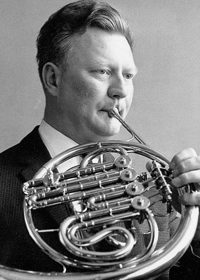
Alan Civil was born in 1929 and died in 1989. Alan started to play the French horn as a young boy, and joined an army band as a teenager. He studied the horn with Aubrey Brain, the father of Dennis Brain, and played second horn to Dennis Brain in the Royal Philharmonic Orchestra, taking over as principal horn when Dennis Brain left. In 1955 Alan joined the Philharmonia as principal horn, and in 1966 he became the principal horn of the BBC Symphony Orchestra, where he remained until he retired in 1988. He also performed as a soloist and recordings include Mozart's 'Four Horn Concertos' and Benjamin Britten's 'Serenade for Tenor, Horn and Strings' with Robert Tear. He was also a member of the Alan Civil Horn Trio, taught at the Royal College of Music and was awarded an OBE in 1985. Alan was also a prolific composer and arranger, writing many pieces for the horn as well as for an array of unusual instrument combinations.
Related products
Arranged by Robin Benton, all brass players and their audiences should enjoy this rousing well known March from Verdi's 1871 grand opera Aida. The Egyptian army has returned from its victory over the Ethiopians and the melodies are suitably triumphant in style. The first melody ends with trumpet fanfares leading to the well known second melody which is repeated in a higher key. The opening theme returns and the March ends with a rousing coda.
A beautiful melody for French horn, this famous tenor aria, arranged by Tom Whitehurst, is full of soul, passion and tragedy. Vesti La Giubba - put on the costume and prepare to laugh. For colleges conservatories, professionals, amateurs and community performing groups.
Brass Quintet
Arranged by Stephen Wick, this is a show piece for two solo piccolo trumpets and is a sumptuous alternative to the Purcell. For advanced students and professionals.
Brass Quintet
Two Bach fugues arranged effectively for brass quintet by Ian Lawrence. For schools, studios and professionals.
Brass Quintet
This attractive brass quintet based on the traditional sea shanty What Shall We Do With The Drunken Sailor opens with a fanfare followed by a main theme, first on trumpets and then on the horn. A series of linked variations follow, with the tune passed between the instruments in constantly changing tempos and styles. A strong rhythmic accompaniment keeps the sea shanty mood and the piece finishes with a showy flourish. Arranged by Eileen Clews, this light hearted work gives each player the chance to show off their instrument, so making it an ideal concert piece or a study piece for brass workshops.
Brass Quintet
Written to be light, bright entertainment this work is an interesting, melodic suite with plenty of rhythmic coloration. The four movements are very varied and include a lyrical and soulful horn solo, unusual in this sort of repertoire. For colleges, conservatoires, professionals.